Asif Khan
Machine Learning and AI for Medicine
I am a Staff Scientist at Harvard Medical School, working with Chris Sander and Debbie Marks.
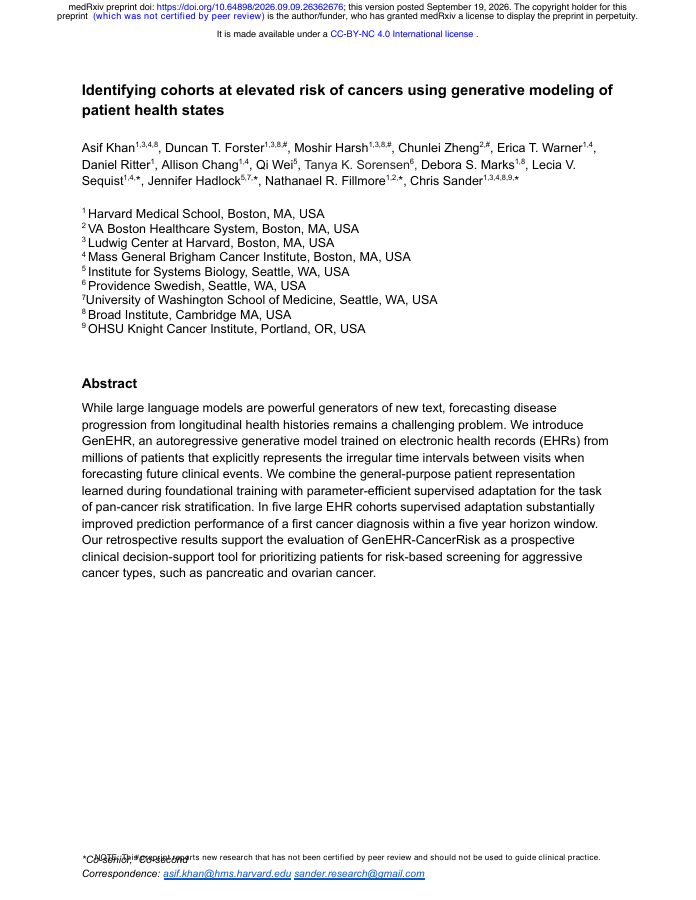
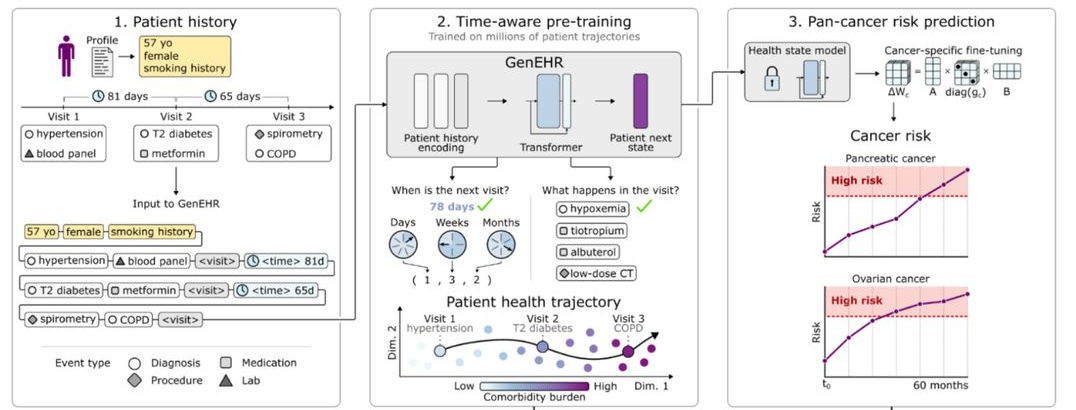
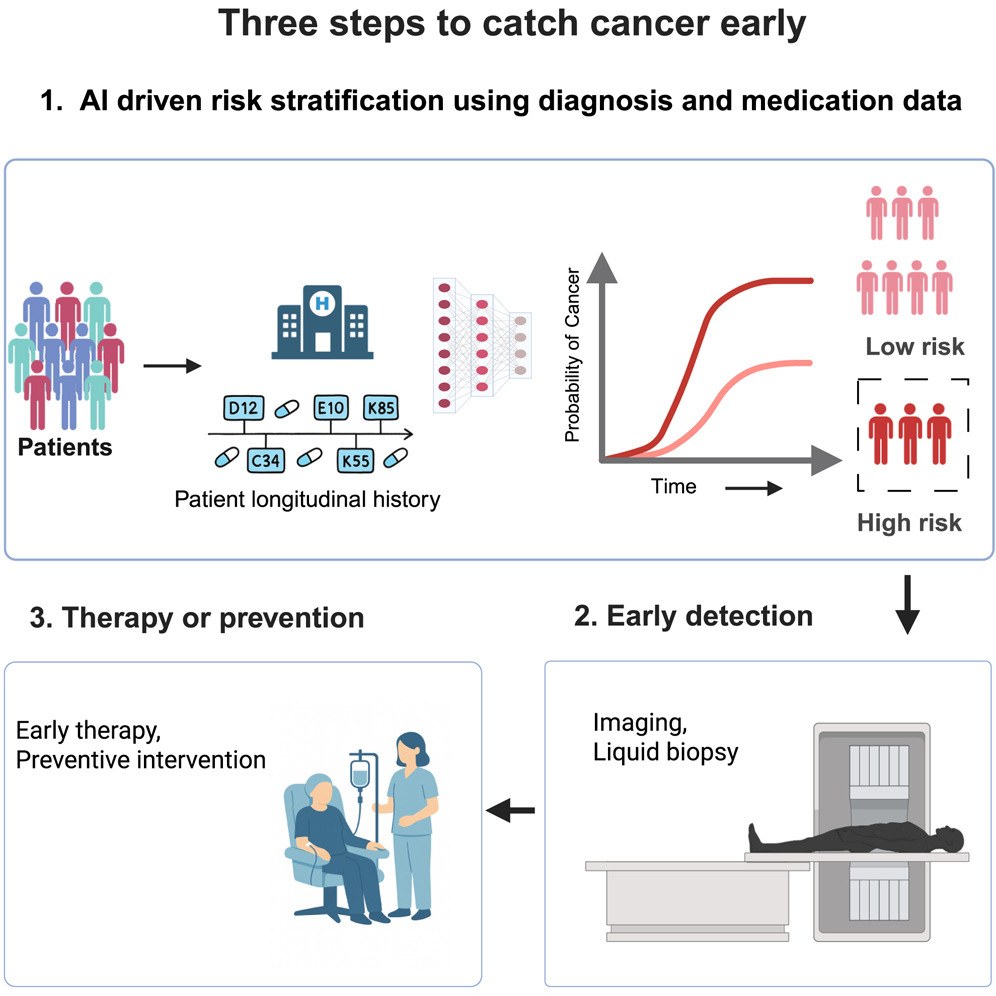
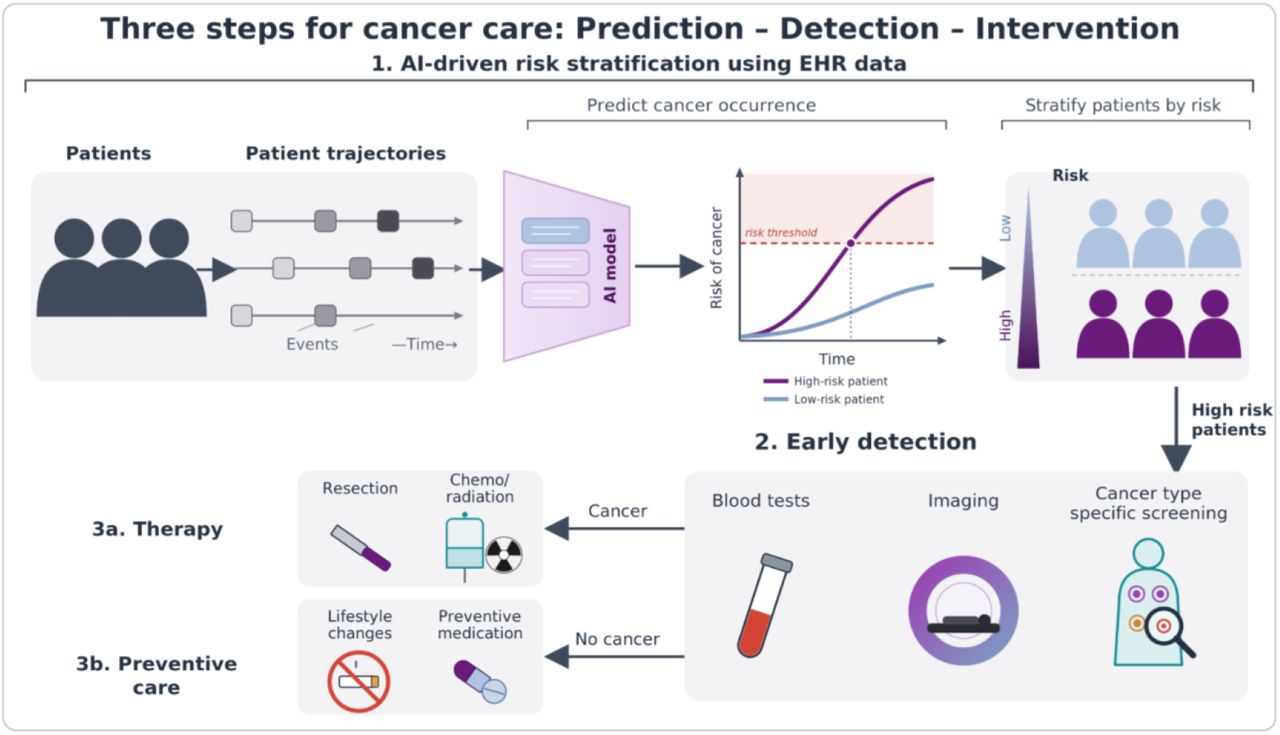
My research focuses on representation learning and generative models for large-scale patient health data and cancer biology. My goal is to develop AI methods that use such data for cancer early detection and prognosis, helping clinicians make informed decisions and improve care pathways.
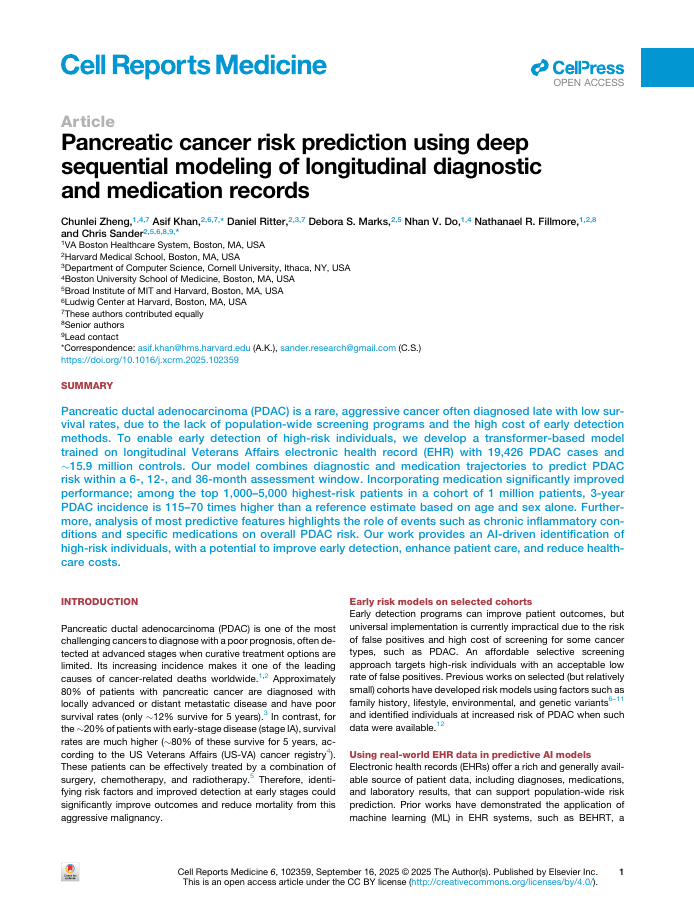
I develop models that learn from longitudinal health records to track changes in patient health and estimate risk across cancer types. I focus on making these models scalable, robust, and well-calibrated across patient populations and clinical settings. I also use drug and CRISPR perturbation data to model cellular responses and guide combination therapy design.
I am also a visiting postdoc with Jenn Hadlock at ISB and a research associate with Erica Warner at MGH’s early detection clinic, with affiliations at the Ludwig Center at Harvard and Broad Institute.
I completed my PhD in Machine Learning at the University of Edinburgh with Amos Storkey, working on geometry for deep representation learning. I continue to study geometric methods for representation learning and interpreting large language models.